
The authentication of stamps today is a complex, multi-step professional process in which technical, chemical, printing, and philatelic knowledge all play a role. The goal is not only to determine whether a stamp is genuine or forged, but also to precisely identify the printing period, paper type, watermark, and any possible manipulations.
Primary Visual Examination – with Magnifying Glass and Microscope
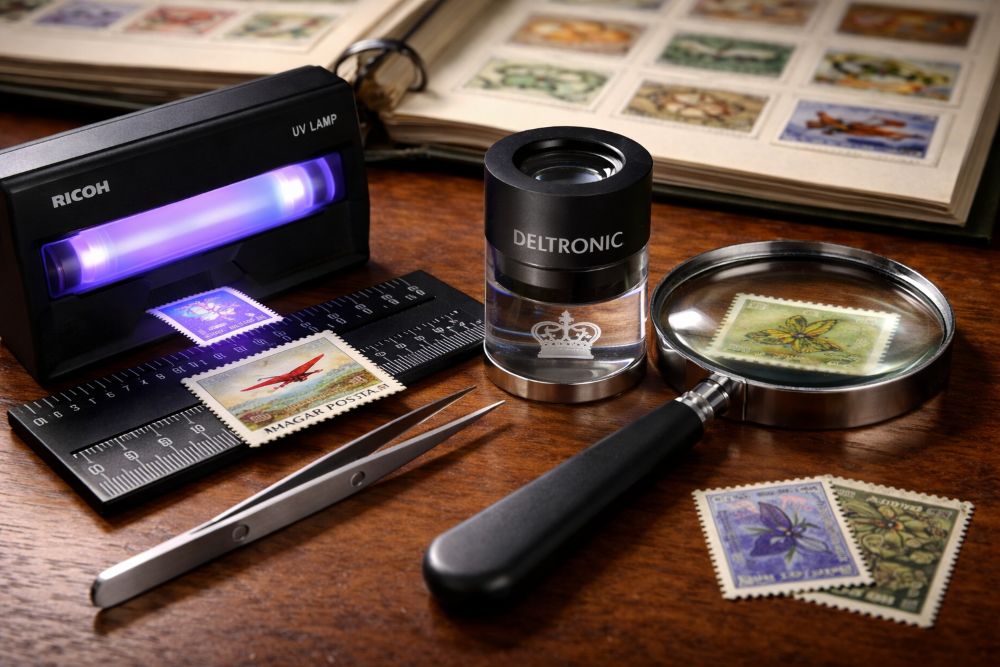
The expert first checks the stamp image's lines, dot structure, shading, ink texture, paper surface, perforation characteristics, and postmark structure with the naked eye, then at 10–30× magnification. Forgeries often appear grainier, blurrier, show digital or offset printing traces, or have perforation that differs from the period's original.
Paper Examination – the Stamp's „Body” Tells the Story
Paper is one of the most difficult elements to forge. The expert examines the paper fibres under a microscope, measures paper thickness, light transmission, and the naturalness of ageing. Old paper does not yellow evenly; the fibre structure and surface texture also differ from modern papers, providing important clues for authenticity assessment.
Watermark Examination – the Most Important Identifier
Watermarks are checked with watermark fluid, specialised LED watermark detectors, backlighting, or digital contrast enhancement. The expert determines the watermark type, orientation, position, and possible watermark cylinder flaws. Since the watermark is embedded in the paper during papermaking, it is virtually impossible to forge, making it one of the strongest pieces of evidence for determining the year and paper type.
Perforation Examination – with Perforation Gauge
The type and quality of perforation reveal a great deal about a stamp's origin. The shape of the teeth, the distance between perforation pins, the evenness of the perforation, and tooth damage are all examined. Forgers often reperforate stamps to make them appear as rarer varieties, but micro-damage at the tooth bases, irregularities, and the perforation's character are telling signs.
Ink Examination – Under UV, IR, and Special Lights
Ink behaviour under UV light, infrared light, or polarised light can differ. Modern inks often fluoresce or absorb light differently from period printing inks. In professional examinations, even pigment composition may be analysed, helping to distinguish period-authentic prints from later forgeries or post-production manipulation.
Postmark Examination
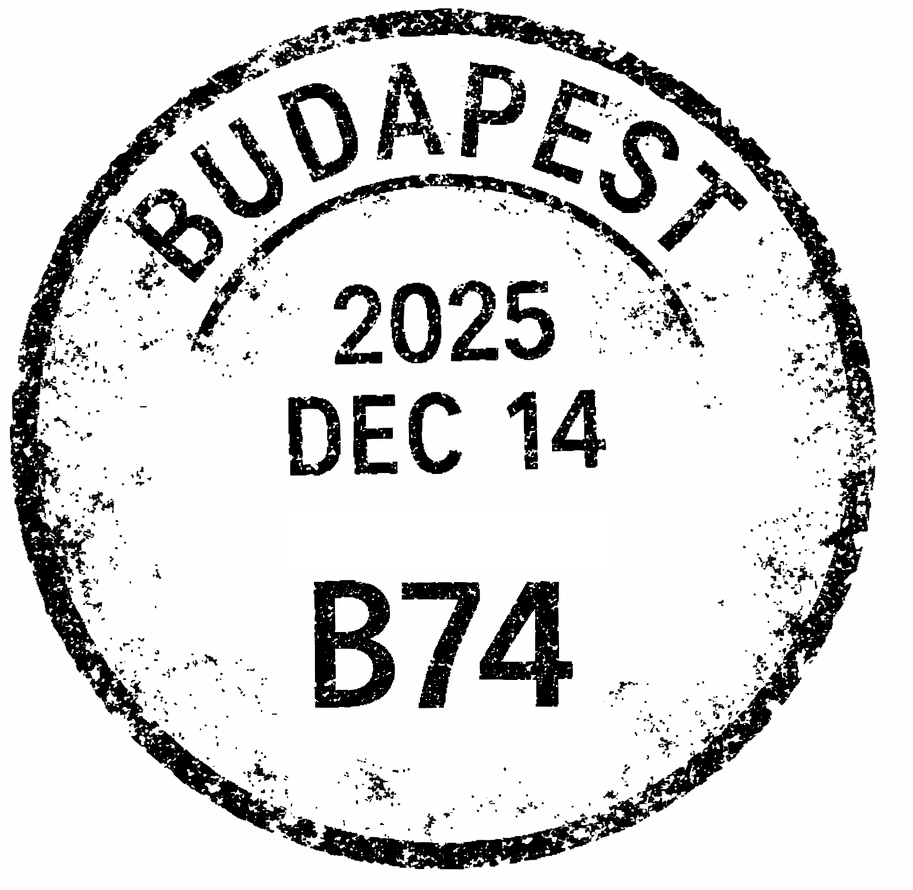
The postmark often reveals a great deal about a stamp's actual postal use. The ink type, the wear of the canceller's rubber, the logic of the date, and the depth of the impression are all examined. A forged postmark is often too sharp, too black, does not match the paper fibres, or uses a non-period date, raising suspicion in the expert's mind.
Catalogue and Plate Position Comparison
The expert compares the stamp with known plate flaws, field positions, paper types, watermark orientations, and perforation varieties. This is especially important for series such as the Hungarian Turul stamps, where multiple paper types, multiple watermark orientations, multiple plates, and numerous permanent flaws exist. Identifying the plate position and field position is often decisive for authenticity and rarity assessment.
Chemical Examination – Detecting Manipulation
If there is suspicion that the stamp was altered after printing, chemical examination may follow. This checks for chemical colour alteration, erasing, paper bleaching, postmark removal, or reperforation. Chemical traces often become clearly visible under UV light or a microscope, for example as discoloured fibres, shiny spots, or damaged paper structure.
Digital Comparison – with High-Resolution Reference Material
Modern experts use high-resolution scanning (up to 1200–4800 dpi) and digitally compare the stamp against reference samples. They look for pixel-level deviations in line work, letterforms, decorative elements, and the position of plate flaws. This is particularly effective for filtering out forgeries of rare, high-value stamps.
Issuing an Expert Certificate
If all examination results support that the stamp is genuine and matches the stated type, year, paper, and watermark, the expert issues a photo-attached, numbered, and officially sealed certificate of authenticity. This certificate can significantly increase the stamp's market value, especially for rare or often-counterfeited items.
Summary
Stamp authentication today is a scientifically rigorous, multi-step process in which paper, watermark, ink, perforation, postmark, plate position, and digital comparison all play a role. The Turul series is particularly complex, so a professional examination of a single piece can take 20–30 minutes. For those seriously involved in philately, this kind of in-depth examination is not a luxury but a fundamental requirement for maintaining a collection's authenticity.
Hozzászólások
A vélemények és tapasztalatok sokat segíthetnek másoknak is.